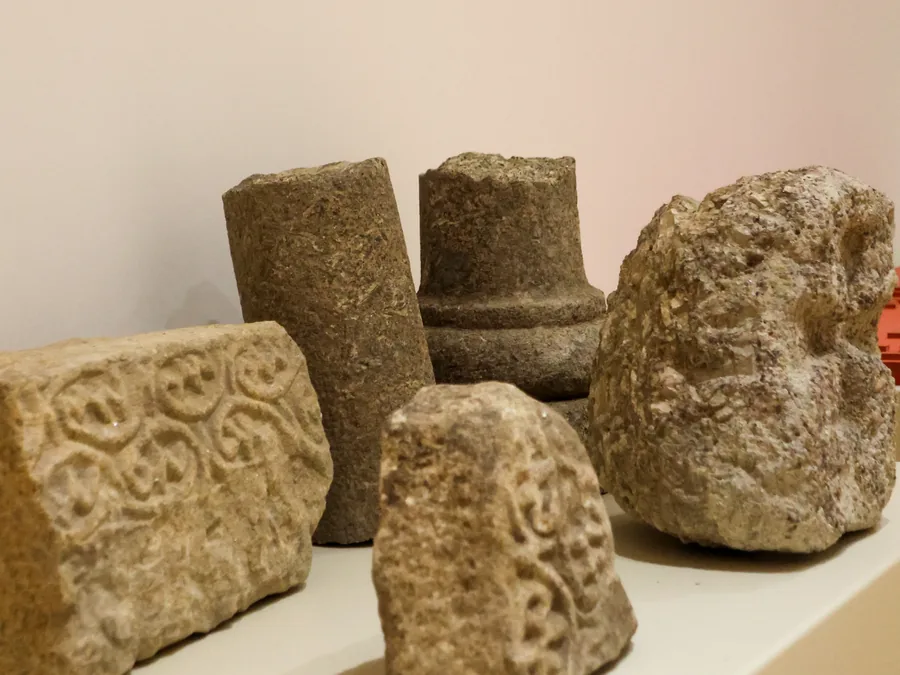
During the process of redeveloping the monastery building for the implementation of this museum, archaeological interventions were carried out. Between 2009 and 2010, several archaeological materials were recovered, among which are these architectural elements from the primitive church, believed to belong to the Romanesque phase of the building.
Fragments of decorated architectural elements (Late Middle Ages)
The granite architectural element fragments feature decoration with vegetal motifs. The motifs are created using a chamfered, oblique cut, typical of Northern Romanesque architecture, influenced by the use of granite. These blocks were collected out of their original context but are integrated into the current building. One of them supported the roofing framework.
Column base (Late Middle Ages)
Granite column base, with a square plinth and a superimposed circular torus. This architectural element was collected out of its original context, from a fill deposit in the north wing of the building.